Short answer
Justice represents fairness, careful judgement and responsibility for choices in tarot. The card invites you to weigh evidence and different interests before reaching a conclusion.
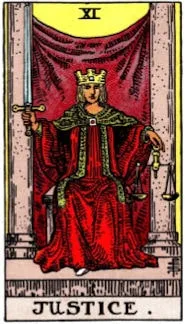
Upright meaning
Upright, Justice asks for balance and consistency. Consider the effect of your actions as well as what you intended.
Reversed meaning
Reversed, the card may reflect bias, unequal treatment or avoiding responsibility. Ask which perspective has been left out of the discussion.
Justice in love
In love, Justice concerns reciprocity and fair agreements. Discuss an imbalance without turning the conversation into a competition to be right.
Justice and career
At work, the card suits clear criteria and accountability. Make expectations explicit before judging somebody’s contribution.
Justice and money
For money, the symbolism concerns clarity and fair exchange. The card does not predict the outcome of a contract or dispute.
Justice as a daily card
Check one assumption and correct a small oversight today. An honest response can be more useful than defending your first position.
Yes or no?
Yes if the choice is fair and well considered; otherwise reassess. The card is not a binding verdict about who is right.
Frequently asked questions
Is Justice the same card as Judgement?
No. Justice concerns weighing choices and taking responsibility. Judgement emphasizes reflection, awakening and choosing a new direction.
Does Justice predict the outcome of a court case?
No. The scales and sword are symbols. A tarot card cannot establish a legal outcome.
These texts are original, contemporary interpretations of tarot as symbolic reflection. Meanings, reversals and yes-or-no readings vary between traditions. Historical background for Rider-Waite-Smith symbolism: A. E. Waite, The Pictorial Key to the Tarot.