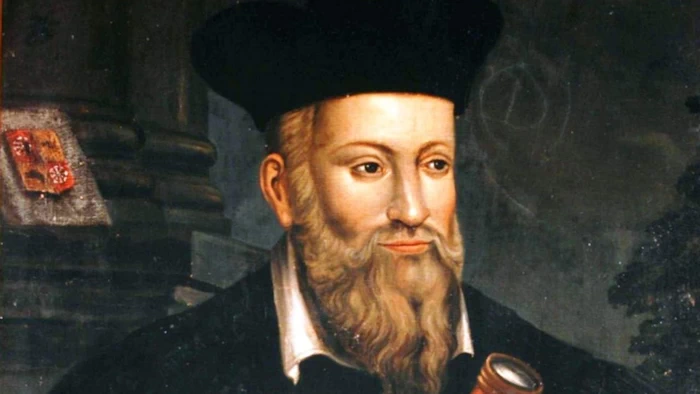
What did Nostradamus predict for 2027? The careful answer is that the historical sources linked below do not establish a clear, authenticated prediction for that calendar year. This article explores why his writings still invite interpretation and how to read claims about 2027 without mistaking a modern story for an original prophecy.
Who was Nostradamus?
Michel de Nostredame, known as Nostradamus, was a sixteenth-century French author. His Prophéties first appeared in 1555. The work contains quatrains: short poems of four lines, grouped into collections called centuries. A century here is a group of verses, not a straightforward reference to a hundred-year period.
Why attach his name to 2027?
Images of rulers, conflict, upheaval and natural forces can be connected to many different moments in history. A reader who starts with a contemporary concern may recognise that concern in an ambiguous passage. Recognition, however, is not the same as a dated prediction. A convincing interpretation must explain both the wording and why it refers to 2027 rather than another year.
War, technology or the end of the world?
A headline naming one of these subjects does not supply the missing evidence. We do not present a war, a technological breakthrough or a catastrophe in 2027 as an established Nostradamus prediction. Nor do we rewrite his verses as if he used modern terms. Such stories may be interpretations or speculation; that distinction should stay visible.
Three questions to ask about a prediction
First, is there a precise reference to the century and quatrain, with the original French text? Second, does the translation preserve the meaning, or add names, dates and ideas that are not in the source? Third, what independently checkable reason connects the passage to 2027? Without those details, treat the claim as an interpretation, not a historical finding.
Looking ahead from the end of 2026
The appeal of a prophecy is understandable: a new year raises questions about what will change. You can enjoy the mystery while keeping your choices grounded in what you know. Instead of asking which dramatic event must happen in 2027, consider what you would like to build, learn or care for regardless of the headlines.
Sources and editorial approach
The Bibliothèque nationale de France record for Les Prophéties describes the work and its publication history. Its record of a facsimile of the 1555 edition provides a further bibliographic reference. These records support the historical background; they do not authenticate a prediction for 2027. This article is an editorial guide to interpretation, not a new translation of the original verses.
For entertainment and reflection. Your future is yours to shape.